Flare: Designing social infrastructure for campus groups

Experience
Branding

Background

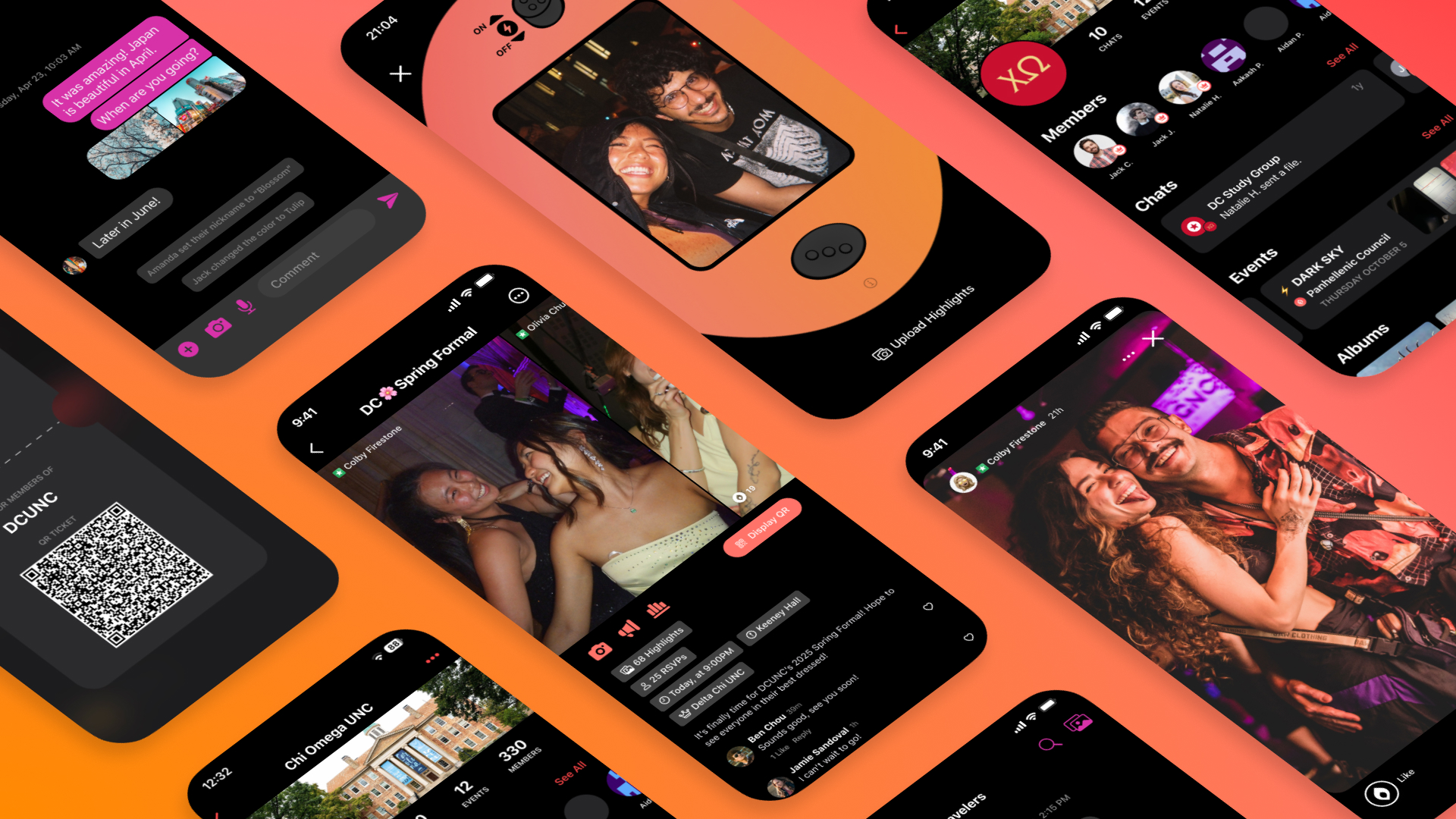
Flare is the one-stop-shop for group communication, events, and management. It's a product that I've collaborated on with founders Jack Chen and Daniel Breyer since 2017.

Project Overview

CEO and founder, Jack Chen, needed a designer that could take his group communication concept from 0→1. I provided the product and brand design experience needed to bootstrap Flare and grow its user base.

Flare Origins

In 2017 at Brown University, founder Jack Chen was building an events app called FlairTime. What he observed inside Greek life applied broadly across campus organizations.
“I saw a huge need within student organizations to make communication easier. People were using so many different apps just to stay organized.” – Jack Chen
Flare emerged from that observation with a clear goal: replace a messy amalgam of apps with a purpose-built system for groups.

The Challenge

Campus groups are not just chats or calendars. They are living systems that plan events, move money, onboard members, make decisions, and preserve continuity as leadership turns over every year.

Before Flare, student organizations stitched together an ecosystem of tools:
For campus groups, this meant disorganization and cognitive overload. Important information scattered, engagement dropped, and organizers spent more time managing tools than building community.

The real problem wasn’t missing features. It was fragmentation.

My Role

I partnered closely with CEO and founder Jack Chen to take Flare from concept to a scaled product used across hundreds of campuses.

My responsibilities included:
This was sustained 0→1 work, iterating over multiple years as the product and user base matured.

Product Strategy

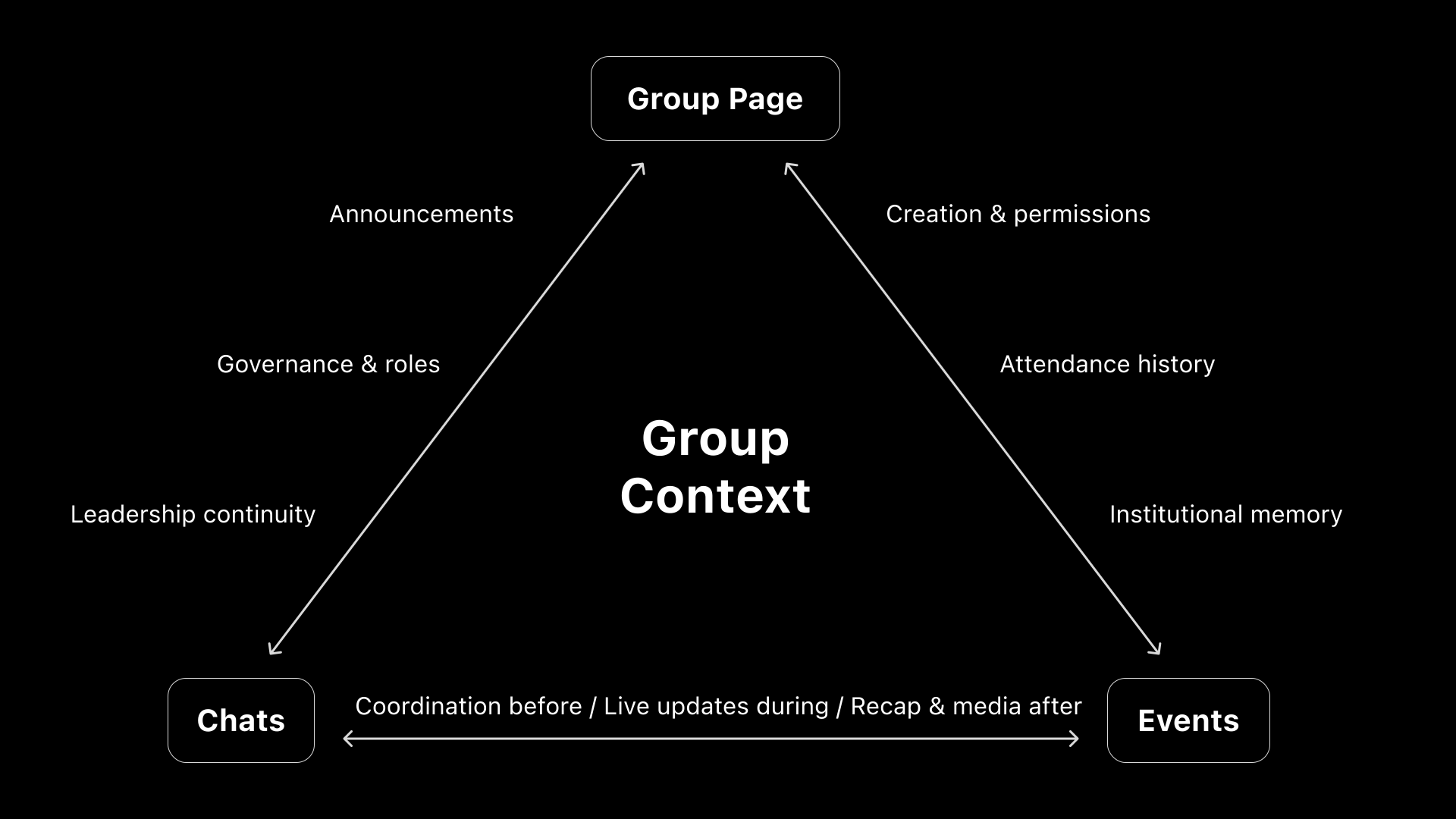
Flare is organized around three tightly integrated pillars:
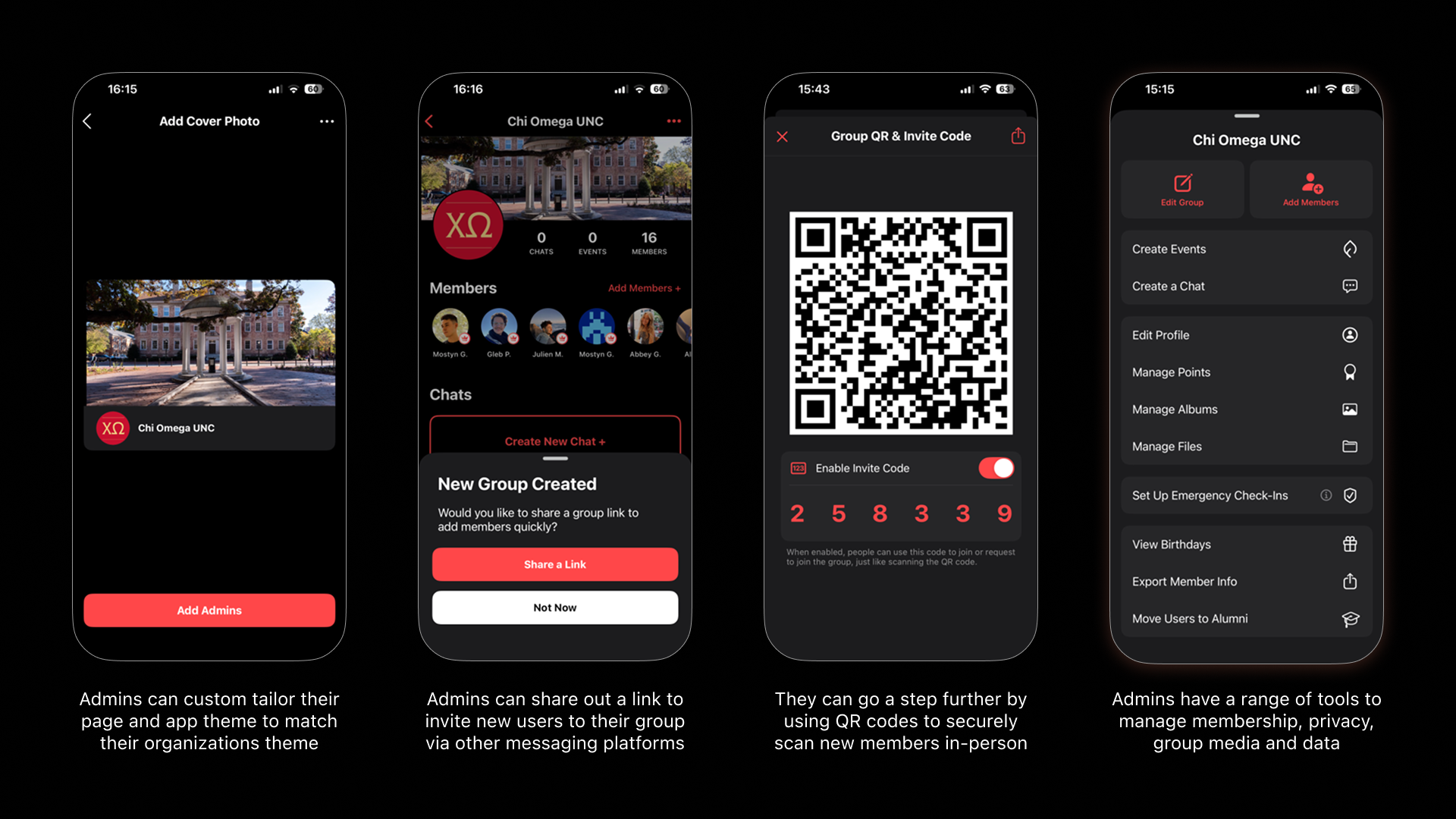
  1. Group Pages — long-term organizational structure
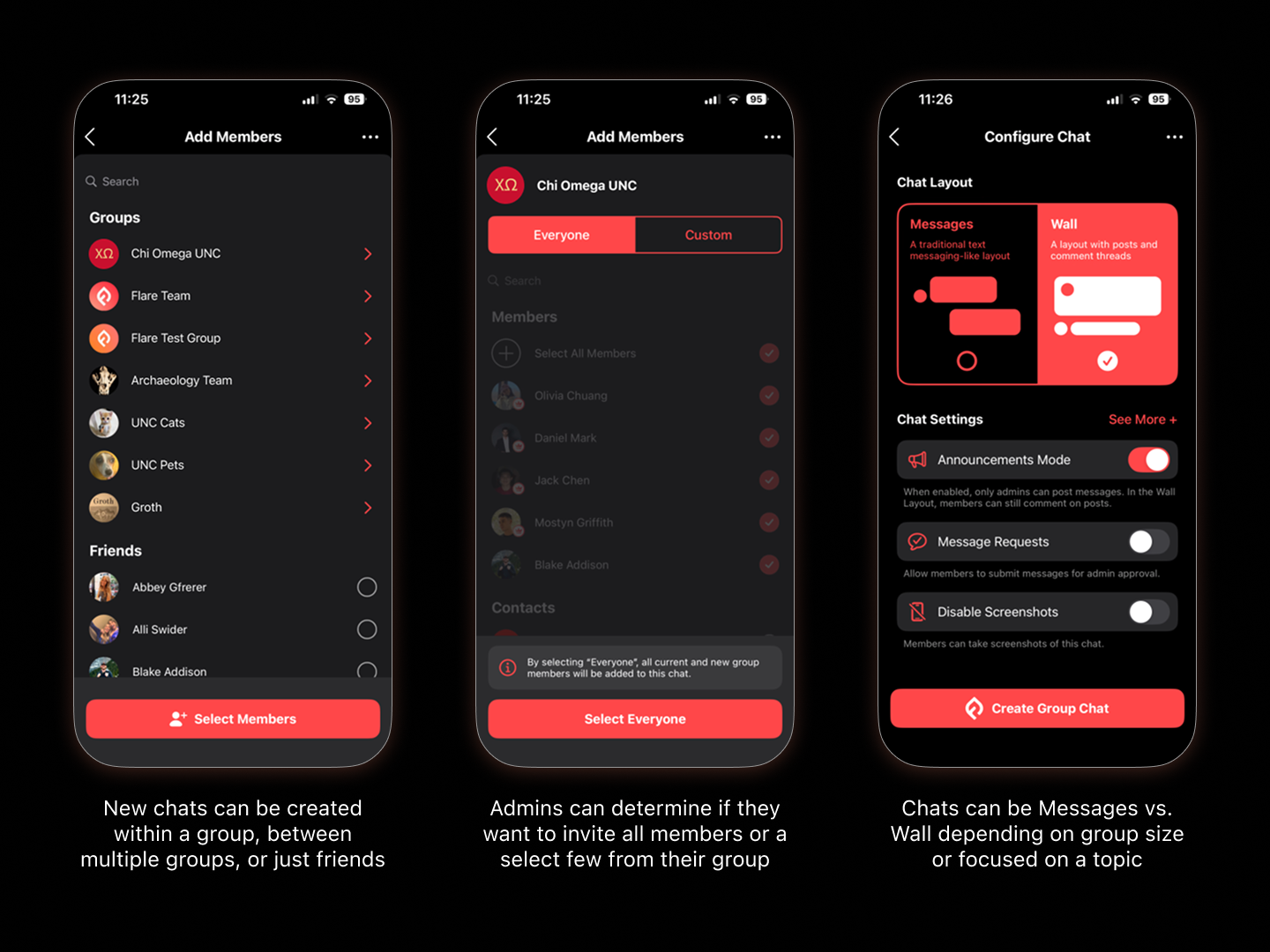
  2. Group Chats — flexible communication modes
  3. Events — time-bound shared experiences
Flare is a single system with multiple entry points, designed around how groups actually operate over time. Each pillar solves specific friction points while reinforcing the others.

Pillar 1: Events

Friction Points

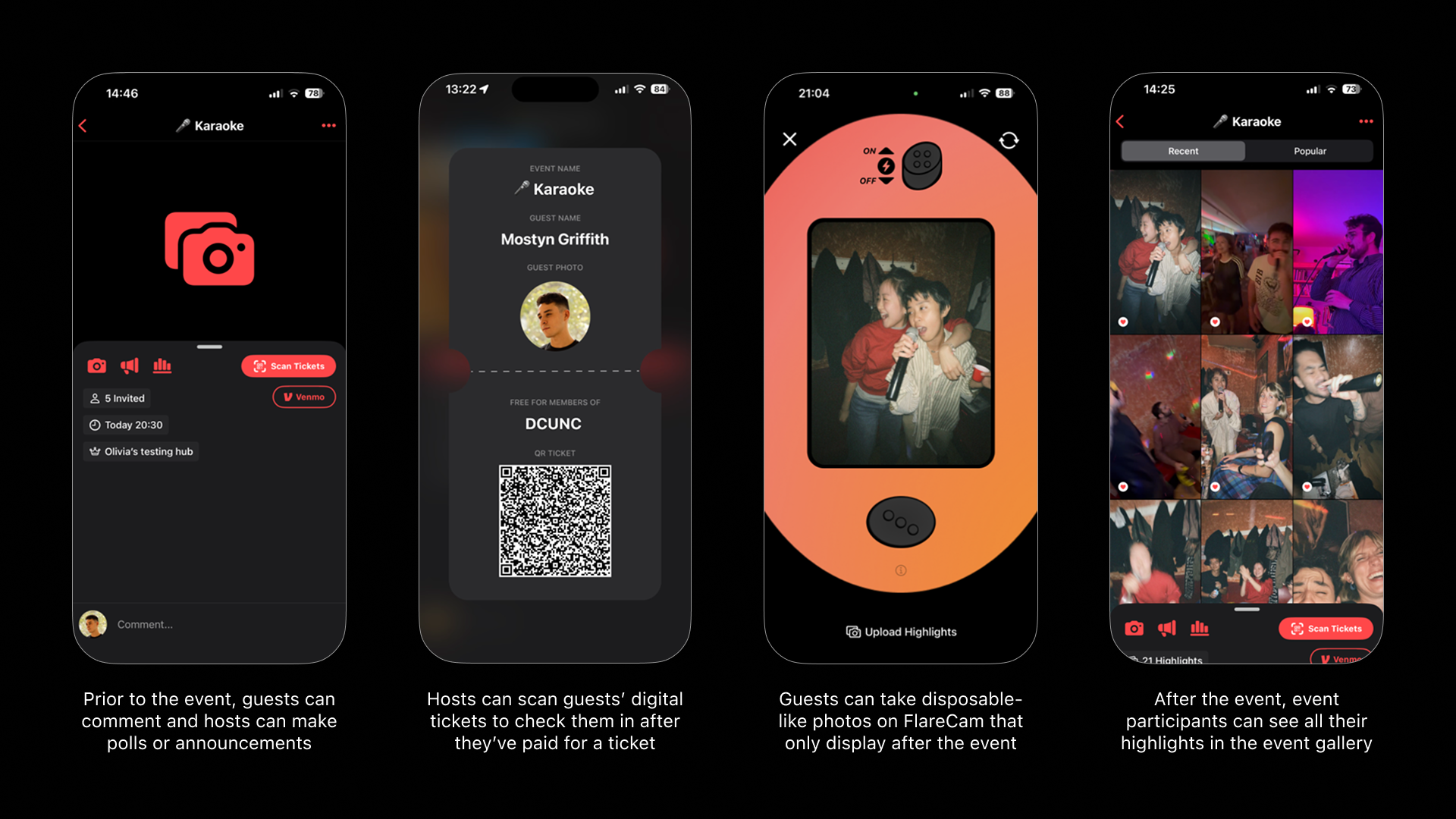
Events are the heartbeat of student groups, but planning them usually means juggling tools for invites, payments, updates, check-in, and photos; often in real time.

Design Principle

Treat events as active, temporal spaces, not just static listings.

Key Design Decisions

Behavioral Impact

Events didn’t end when the doors closed. Photos, chats, and recaps flowed naturally back into the group, reinforcing memory and continuity.

Pillar 2: Group Chats

Friction Points

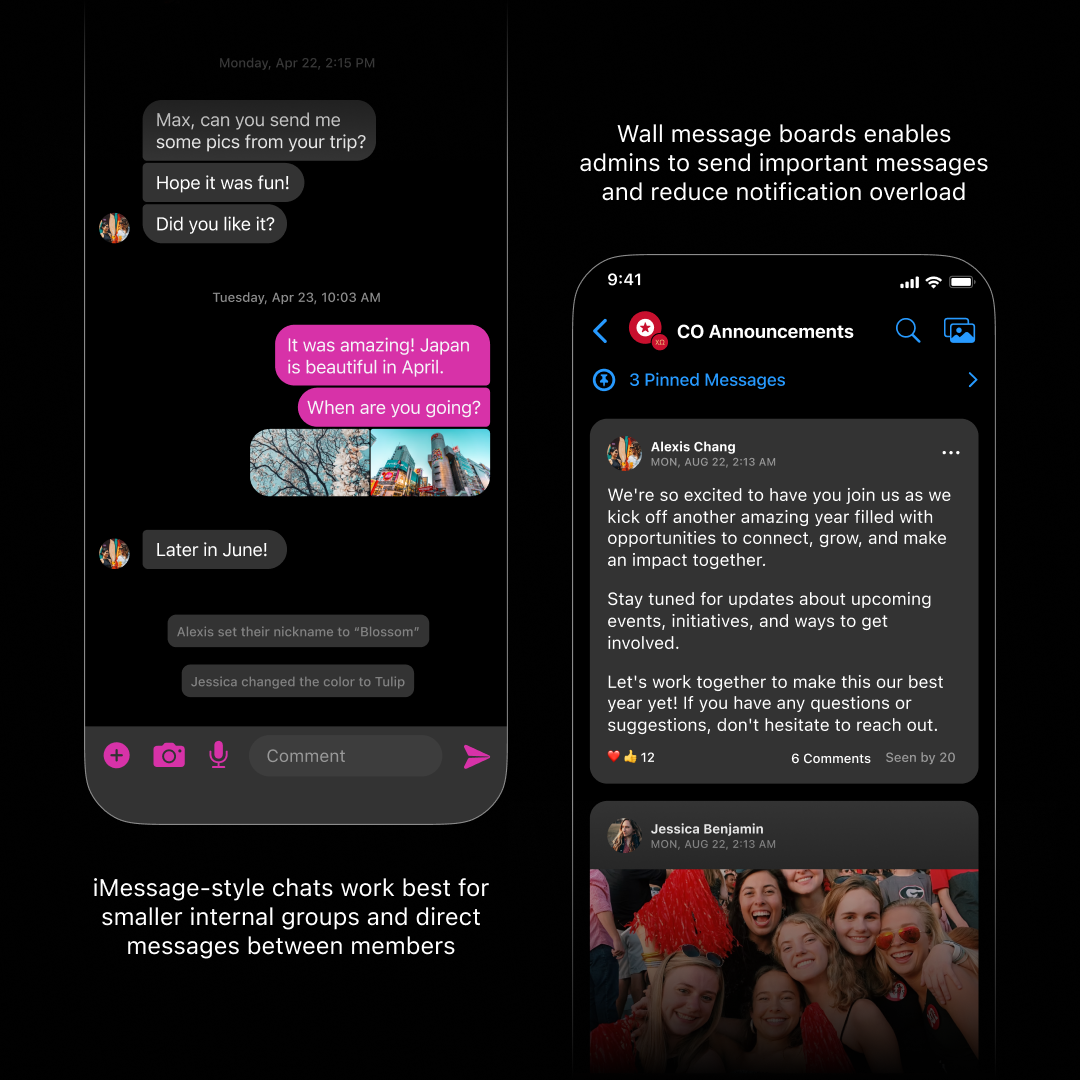
Linear group chats collapse under scale. Urgent messages get buried and meaningful discussions feel out of place in rapid-fire streams.

Design Principle

Match communication mode to intent.

Key Design Decisions

Behavioral Impact

Noise decreased while participation increased. Important posts stayed visible without sacrificing spontaneity.
“My chapter uses an announcements group chat where executive officers can share important updates... I've found this to be a huge help for my chapter! We're able to prevent unwanted messages and questions from being sent in the chat.”
– Lily Byrd, President of Kappa Alpha Theta at Texas A&M

Pillar 3: Group Pages

Friction Points

Student leaders need structure and continuity, but most members just want things to work.

Design Principle

Power for admins, simplicity for members.

Key Design Decisions

Behavioral Impact

Groups scaled more easily, leadership transitions became smoother, and institutional knowledge stopped disappearing each year.

Outcomes & Impact

Following iterative UX, brand, and marketing improvements:
Flare remains a case study in designing long-term social infrastructure: systems that survive leadership turnover, scale gracefully, and quietly fade into the background allow community to take center stage.

Interested in collaborating?
Schedule a free consultation.